

Beating the S&P 500 is possible, but it's uncommon and hard to repeat. Roughly 10% of actively managed large cap funds outperform the index over a 10-year stretch after fees, and most self-directed investors who try fare no better. Certain rule-based strategies and market regimes can tilt the odds in your favor, though. The rest of this guide covers the evidence and a practical framework for pursuing it responsibly.
TL;DR:
- Only about 10% of large-cap active funds outperform the S&P 500 over ten years after deducting fees and trading costs.
- Strategies like factor tilts, equal-weighting, and sector concentration can beat the index in certain environments but often underperform in live trading.
- Building a disciplined, rule-based approach with a core index holding and small active bets helps manage risk and improve chances of outperformance.
- Excess costs from high turnover and taxes can significantly eat into potential gains, making low-cost, tax-efficient strategies essential.
- Using a transparent, rules-driven system like StockPilot can improve decision-making by reducing guesswork and enforcing strict, pre-defined trade criteria.
Table of Contents
- What the Data Says About Beating the S&P 500
- Which Strategies Have Actually Outperformed?
- How Do You Build a Rule-Based Framework to Try to Outperform?
- How Much Do Fees and Taxes Really Cost You?
- How Can a Rules-Based System Like StockPilot Help?
- When Is It Worth Trying to Outperform?
- How to Evaluate StockPilot as Your Next Step
- Sources
- FAQ
What the Data Says About Beating the S&P 500
The math is not kind to stock pickers. Only about 10% of large-cap active funds beat the S&P 500 over a full decade once fees and trading costs are subtracted. That figure comes from long-running SPIVA-style scorecards that track fund performance against benchmarks year after year, and it holds up across market cycles, not just bear markets or bull runs.
The 10% baseline: Out of every ten actively managed large-cap funds, roughly nine fail to beat their benchmark over ten years once costs are included. That's the honest starting point for anyone considering an active approach.
A Harvard Business School working paper digs into why: fees, portfolio turnover, and taxes act as structural drags that compound over time, quietly eating into what looks like outperformance on paper. Measurement itself trips people up too. A few things distort the picture:
- Survivorship bias. Funds that close or merge disappear from the data, which flatters the funds still standing.
- Time horizon mismatch. A strategy that wins over three years often reverts over ten.
- Pre-tax vs. after-tax returns. Gross performance numbers hide the tax bill that arrives every April.
- Benchmark selection. Comparing a growth-heavy portfolio to the broad S&P 500 instead of a growth index can make skill look better than it is.
Investopedia's breakdown of index-beating attempts reaches a similar conclusion: market efficiency and low costs make the index a genuinely tough opponent, which is exactly why matching it remains the sensible default for most money.
Which Strategies Have Actually Outperformed?
Some approaches do beat the index for real stretches, and understanding the mechanics helps you judge whether a strategy is skill or just a lucky regime.
Factor tilts toward momentum, value, or quality stocks have posted multi-year runs of outperformance, particularly when the broader market rotates away from mega-cap growth names. Value tilts, for instance, tend to shine coming out of high-inflation periods when investors reprice growth stocks lower.
Equal-weight strategies ditch market-cap weighting and give every holding the same slice of the portfolio. That structure outperforms during high-dispersion environments, when smaller and mid-sized names catch up to the mega caps that dominate the cap-weighted index. One equal-weight ETF has actually beaten the S&P 500 over a 20-plus year window, though that stretch includes years where it lagged badly.
Sector and theme concentration can produce standout returns when you correctly time a rotation, but concentrated positions cut both ways:
- Higher potential upside when the thesis plays out
- Materially higher volatility and drawdown risk when it doesn't
- Less diversification cushion during sector-specific shocks
Concentrated stock-picking works the same way. A 10 or 15-stock portfolio can crush the index in a good year and get crushed in a bad one.
Here's the catch with all of these: a strategy that crushed a backtest often disappoints in live trading. Out-of-sample performance and real transaction costs typically shave off a chunk of paper alpha, so treat any backtested strategy with healthy skepticism until it's proven itself with real money on the line.
How Do You Build a Rule-Based Framework to Try to Outperform?
Chasing outperformance without a system is how good ideas turn into bad outcomes. Here's a structure that keeps you honest.
- Set a measurable goal and benchmark. Decide upfront what "beating the S&P 500" means for you: total return, after fees, over a 5 or 10-year horizon, not a lucky quarter.
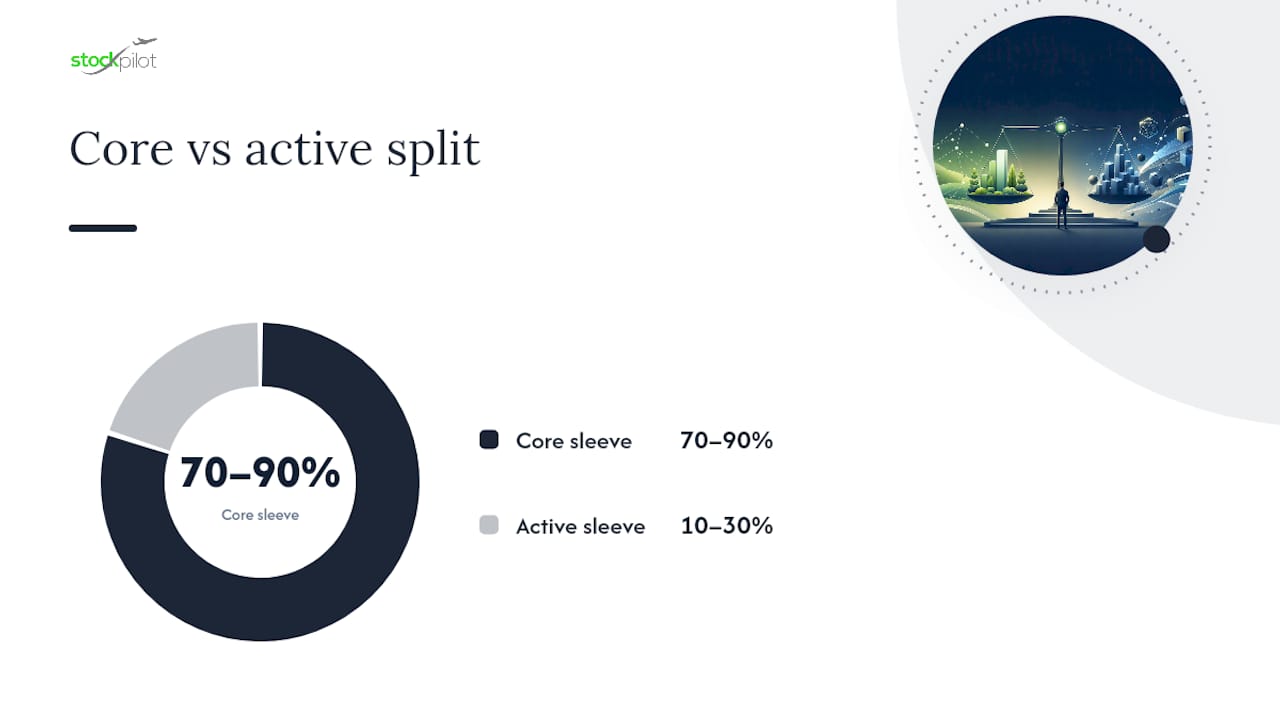
- Split core and active sleeves. Keep the bulk of your portfolio, 70 to 90%, in low-cost index funds. Cap the active sleeve at whatever amount you can afford to underperform without wrecking your plan.
- Write down entry and exit rules before you buy anything. Position sizing caps, stop-loss thresholds, and rebalancing triggers should exist on paper before the trade, not after a loss.
- Place trades with tax efficiency in mind. High-turnover strategies belong in IRAs or 401(k)s where short-term gains don't trigger a tax bill every time you sell.
- Review performance on a calendar, not on emotion. Quarterly or annual check-ins against your stated benchmark, with pre-defined criteria for when a strategy has failed and should be cut.
Pro Tip: Track gross returns, net returns, volatility, and turnover separately. A strategy that looks great on gross returns can turn mediocre once you subtract what you actually paid in fees and taxes.
Dollar-cost averaging into diversified ETFs remains one of the simplest ways to build your core sleeve while sidestepping the timing mistakes that sink most DIY portfolios.
How Much Do Fees and Taxes Really Cost You?
Small numbers compound into large gaps.
Turnover adds a second penalty. Frequent trading generates short-term capital gains, which the IRS taxes as ordinary income rather than the lower long-term capital gains rate. Combine a high-turnover strategy with a taxable brokerage account and you can lose several percentage points of return before you even account for the manager's skill.
A few fixes actually move the needle:
- Anchor your core portfolio in low-cost, broad-market ETFs.
- Batch trades instead of reacting to every headline.
- House your active, high-turnover sleeve inside an IRA or 401(k).
- Favor limit orders over market orders to reduce slippage on less liquid names, and consider execution tactics that reduce avoidable trading costs when timing entries and exits.
How Can a Rules-Based System Like StockPilot Help?
A transparent, rules-based system removes a lot of the guesswork that sinks self-directed active investing. The system runs a 19-position model portfolio combining income-producing positions with growth positions, with all holdings visible to subscribers who mirror trades in their own brokerage accounts.
The system continuously evaluates market, fundamental, technical, sentiment, and statistical data, then issues after-hours buy and sell alerts only when its predefined criteria call for a change, rather than generating a constant stream of speculative picks. During unfavorable market stretches, it can reduce growth exposure and rotate capital toward Treasury ETFs as a risk-management step, while investors keep full control of their accounts and every trade decision.
Before trusting any system with your capital, run it through the same checklist you'd apply to your own strategy:
| Evaluation criterion | What to check |
|---|---|
| Transparency | Are the exact positions and rules disclosed? |
| Track record | Is performance documented over multiple market cycles? |
| Fees | What's the total cost, including the subscription and underlying fund expenses? |
| Execution control | Can you mirror trades in your own brokerage without handing over custody? |
When Is It Worth Trying to Outperform?
Pursuing outperformance makes sense when it's a small, capped allocation, a genuine learning goal, or a skill you're deliberately building, not your retirement plan. For most of your capital, matching the index and focusing on savings rate and low fees still wins. Whichever path you choose, plan for volatility and resist chasing last year's winners.
— David Elliot
How to Evaluate StockPilot as Your Next Step
StockPilot gives you a disciplined alternative to picking stocks alone or paying a fund manager who probably won't beat the index anyway. The service offers a model portfolio, risk controls that can shift toward Treasury ETFs during unfavorable conditions, and after-hours alerts instead of a flood of daily predictions.

Before subscribing, read the risk disclosure and the regulatory disclaimer so you know exactly what you're signing up for. Past performance never guarantees future results, and no system, StockPilot included, can promise you'll beat the S&P 500 every year. What it can offer is a rules-based structure instead of guesswork. If that fits how you want to invest, check out the StockPilot platform or join the waitlist for early access.
Sources
- Etf
- HBS working paper on active management costs and investor returns
- Can you beat the S&P 500? — Investopedia
- Can You Beat the S&P 500? What the Evidence Says — WalnutInvest
This article is general information, not a substitute for advice from a qualified financial advisor. Consult a qualified financial professional about your own circumstances before acting on anything here.
FAQ
Is It Possible to Beat the S&P 500?
Yes, but it's uncommon. Only about 10% of actively managed large-cap funds beat the index over a 10-year period after fees and costs.
Is There Anything That Consistently Beats the S&P 500?
No strategy beats it consistently in every period, but certain approaches, including equal-weight ETFs and factor tilts, have outperformed for multi-year stretches during specific market conditions. A rules-based system like StockPilot pursues outperformance through a documented, risk-managed process rather than a single bet.
What Does "Beating the S&P 500" Actually Mean?
It means your total return, after fees and taxes, exceeds the index's total return over a defined time horizon, not just a single lucky quarter. The comparison only means something when it's measured on the same basis: net of costs, over a comparable period.
Has Anyone Actually Beaten the S&P 500 Over the Long Run?
Some professional managers and specific strategies have, but the group shrinks dramatically over longer horizons once fees and taxes are factored in. The realistic path for most investors is to match the index for the core portfolio and limit active bets to a small, rule-bound portion of the total.